Pocket spring mattresses vs. cold foam mattresses: A comparison of high-quality systems
From sleeping climate to durability at a glance
Appointment for a sleep consultation
Today, high-quality mattresses differ less in their quality than in their technology and functional philosophy. Both pocket spring core and cold foam mattresses can offer an excellent lying sensation, ergonomic support and longevity – depending on the design, use of materials and individual fit. Below is an overview of the main differences and characteristics of both mattress types in the main specialist categories.

Do you sweat a lot at night?
Pocket spring core – ensures good air circulation.

Do you have back or joint problems?
Cold foam – adapts perfectly to the body.

Do you weigh over 90 kg?
Pocket spring core – stable and durable.
Pocket spring core and cold foam at a glance

Pocket spring mattresses vs. cold foam mattresses: A comparison of high-quality systems
Today, high-quality mattresses differ less in their quality than in their technology and functional philosophy. Both pocket spring core and cold foam mattresses can offer an excellent lying sensation, ergonomic support and longevity – depending on the design, use of materials and individual fit. Below is an overview of the main differences and characteristics of both mattress types in the main specialist categories.
Technology & structure
Pocket spring mattresses
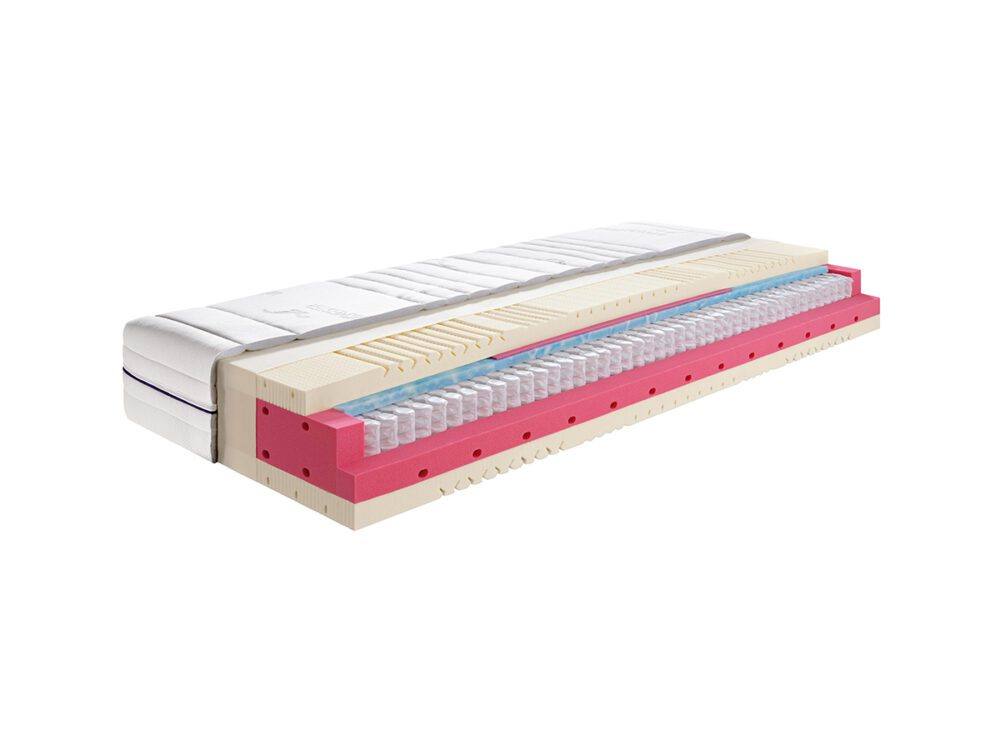
The core consists of numerous steel springs individually sewn into fabric pockets, which react independently of each other. The quality is reflected in the number, shape and quality of the springs as well as the precise zoning (e.g. 7-zone systems).
A key quality feature is the tempering of the steel springs:
- High-quality models use tempered, thermally treated springs that guarantee lasting resilience and elasticity.
- This elaborate manufacturing process clearly distinguishes premium products from cheap mass-produced goods, whose untempered springs can lose their resilience over time.
- The spring core is complemented by carefully coordinated upholstery and comfort layers made of foam or natural materials, which optimize the lying sensation and pressure distribution.
Cold foam mattresses
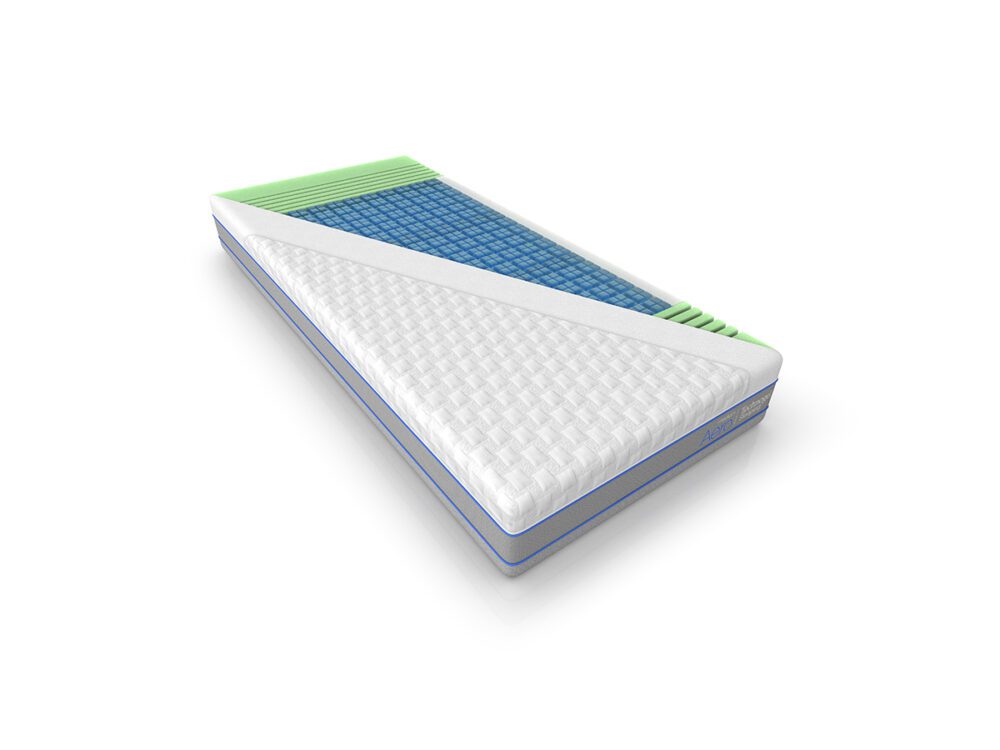
The core consists of high-quality polyurethane foam, which is usually divided into zones with incisions and holes to achieve targeted body contouring.
Modern high-tech foams (e.g. HR, EvoPore or viscoelastic foams) offer high resilience, durability and precise point elasticity.
A key quality criterion is the density (RG):
- The RG is the mass of the foam per cubic meter (kg/m³) and is calculated as:
→ RG = weight of the foam block (in kg) ÷ volume of the foam block (in m³) - A higher RG stands for a denser cell structure, better dimensional stability and longer durability.
- In the premium segment, values from RG 60 are considered particularly high-quality and permanently elastic.
Ergonomics, anatomy & lying properties
Pocket spring core
The individually working springs ensure very precise adjustment: each spring reacts individually to pressure and weight. This provides the body with targeted support – especially in the back and pelvic area – while lighter areas are relieved.
The high point elasticity and dynamic restoring force lead to a stable, ergonomically correct lying position and make it easier to turn during the night.
Cold foam
Cold foam reacts very directly and evenly to body pressure. Differentiated incisions and zoning allow targeted pressure relief to be achieved, especially in the shoulder and hip area.
It adapts to the body in an area-elastic manner and offers a balanced combination of relief and support, which makes it particularly attractive for side and mixed sleepers.
Relief & support
Both types of mattress – in a high-quality version – can offer an excellent balance between relief and support.
- Pocket spring mattresses impress with their precise spring response, lasting resilience and even support over many years.
- Cold foam mattresses offer even pressure distribution and a body-hugging lying sensation with gentle adjustment.
The individual body shape, weight and preferred sleeping position are decisive in determining which type of mattress is subjectively perceived as more comfortable.
Ventilation & sleeping climate
Pocket spring core
The air space between the springs creates an active exchange of air with every movement. This ensures a very good sleeping climate that quickly dissipates moisture and is particularly beneficial for people who perspire easily.
Cold foam
Modern cold foams have open-cell structures and vertical ventilation channels that support air exchange. Nevertheless, the climate usually remains somewhat warmer and more constant, which is pleasant for sleepers with a greater need for warmth.
Service life, quality horizon & hygiene
The lifespan of a mattress depends heavily on the quality of the material, wear and care.
- The quality horizon for high-quality pocket spring mattresses is around 10 to 12 years. Tempered steel springs retain their elasticity for many years and the design ensures a consistently high level of support.
- The quality horizon for cold foam mattresses is around 8 to 10 years, depending on the density, use and ventilation.
Regardless of the type of mattress, the hygiene time horizon should be taken into account:
A person loses around half a liter of fluid per night through sweat and breath. Some of this is removed, but over time residues and moisture accumulate in the core.
This is why professional associations recommend replacing the mattress after 10 years at the latest for hygienic reasons – even if it still appears to be technically intact.
Covers & materials
Both pocket spring and cold foam mattresses are available in a wide range of cover materials:
- Pure natural covers (e.g. virgin wool, cotton, Tencel, silk) for a naturally regulated sleeping climate
- to easy-care, washable covers for allergy sufferers that can be hygienically cleaned and give house dust mites no chance.
The choice of cover has a decisive influence on the sleeping climate, hygiene and ease of care and should always be tailored to personal requirements.
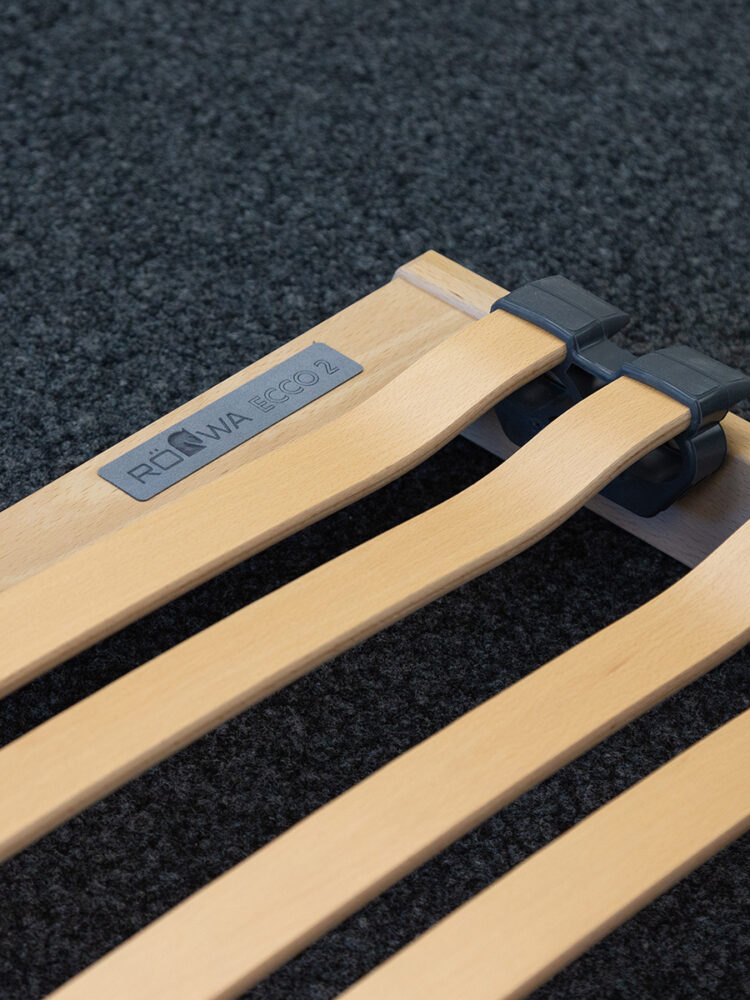
Role of the spring base (slatted frame or box spring)
Pocket spring mattresses
- The mattress core has an independent spring system, which is why the slatted frame primarily has a supporting and ventilating function.
- A stable, flat slat base is ideal for evenly developing the spring effect.
- In high-quality models with tempered springs, lying comfort remains consistently high even on rigid or box spring bases.
Cold foam mattresses
- The slatted frame plays a much more active role here, as the foam core itself has no mechanical spring elements.
- The elasticity and zoning of the slatted frame have a direct effect on ergonomics and lying comfort.
- An adjustable, flexible slat base (e.g. with shoulder lowering or motorized adjustment) can significantly optimize the effect of a cold foam mattress.
- This means that the slatted frame has a greater influence on the lying result with cold foam mattresses than with pocket spring core systems.
Price, quality philosophy & advice at Schlafpunkt
At Schlafpunkt, quality comes before price.
All our mattresses – whether pocket spring core or cold foam – meet strict quality guidelines in terms of
- Longevity,
- Support and relief,
- Climate balance,
- and freedom from harmful and toxic substances.
Our products are manufactured exclusively by renowned manufacturers who meet the highest standards of material purity, sustainability and ergonomic precision.
Both types of mattress start at around CHF 1,700, while particularly elaborately manufactured mattresses with fine natural materials and handcrafted workmanship are available from around CHF 2,500.
However, the following applies:
In the high-quality segment, it is not the price that determines the quality of sleep, but the fit with individual sleeping habits, body shape and any health requirements.
That’s why we at Schlafpunkt attach particular importance to personal specialist advice and individual reclining analyses – so that your new mattress is not only of high quality, but also perfectly tailored to you.
Conclusion
Both mattress types – in a high-quality design – stand for sophisticated sleep technologies with a clear quality philosophy:
- The pocket spring core offers precise support, excellent ventilation, cool freshness and a particularly long service life thanks to tempered springs and first-class upholstery materials.
- The cold foam impresses with its high adaptability, quiet lying sensation, fine pressure relief and the possibility of targeted ergonomic regulation via the slatted frame.
Regardless of the type of mattress, the following applies to long-term healthy sleep:
A mattress should be replaced after around 10 years for hygienic reasons – for a fresh, clean and healthy sleeping environment at the highest level. On our price page, we show you which solutions are suitable for different needs and budgets.
FAQ – Frequently asked questions
Which mattress is better for back pain?
Cold foam mattresses offer better pressure relief thanks to their adaptability. For acute problems, however, we recommend a personal analysis with our spine scanner.
How long does a pocket spring mattress last compared to a cold foam mattress?
Pocket spring mattresses have a longer service life.
Are cold foam mattresses really better for allergy sufferers?
Yes, the material is hypoallergenic. However, pocket spring core scores with better ventilation – both have advantages for allergy sufferers.
Can pocket spring mattresses also be used on adjustable slatted frames?
Yes, they are also suitable for adjustable slatted frames.
Subscribe to the newsletter now
With our newsletter, you will receive regular tips for restful sleep, information on new products and exclusive promotions so that you wake up refreshed every morning.