Sleeping after 40 – why your needs change
What your body needs now to wake up refreshed

Appointment for a sleep consultation
As we get older, not only does our body change, but so does our sleep. Many people over 40 notice that they sleep more restlessly, wake up more often or are less refreshed in the morning. These changes are completely normal – but if you understand them, you can take targeted countermeasures and actively improve your sleep. In this article, you will find out what really changes at 40+, what the causes are and what measures can help you sleep better again.
How sleep changes after 40
With increasing age, the amount of deep sleep decreases, while the light sleep phases increase. It often takes longer to fall asleep and waking up at night becomes more frequent. The sleep hormone melatonin is also produced less – a natural process that changes the internal clock and influences the sleep-wake rhythm.
Common causes of sleep problems after 40
Hormonal changes
Hormonal fluctuations play a major role from the age of 40. In women, the menopause can disrupt sleep with hot flushes and night sweats. In men, testosterone levels drop, which can also lead to restless sleep.
Stress and mental strain
Everyday life with work, family and responsibilities causes constant tension for many people. The stress hormone cortisol often remains elevated in the evening, making it difficult to fall asleep. Relaxation techniques, exercise and fixed sleep rituals can help here.
Lifestyle and habits
With increasing age, the body reacts more sensitively to alcohol, caffeine or late meals. Irregular bedtimes also upset the internal clock. Small adjustments in everyday life can already have a big effect here.
How you can improve your sleep after 40
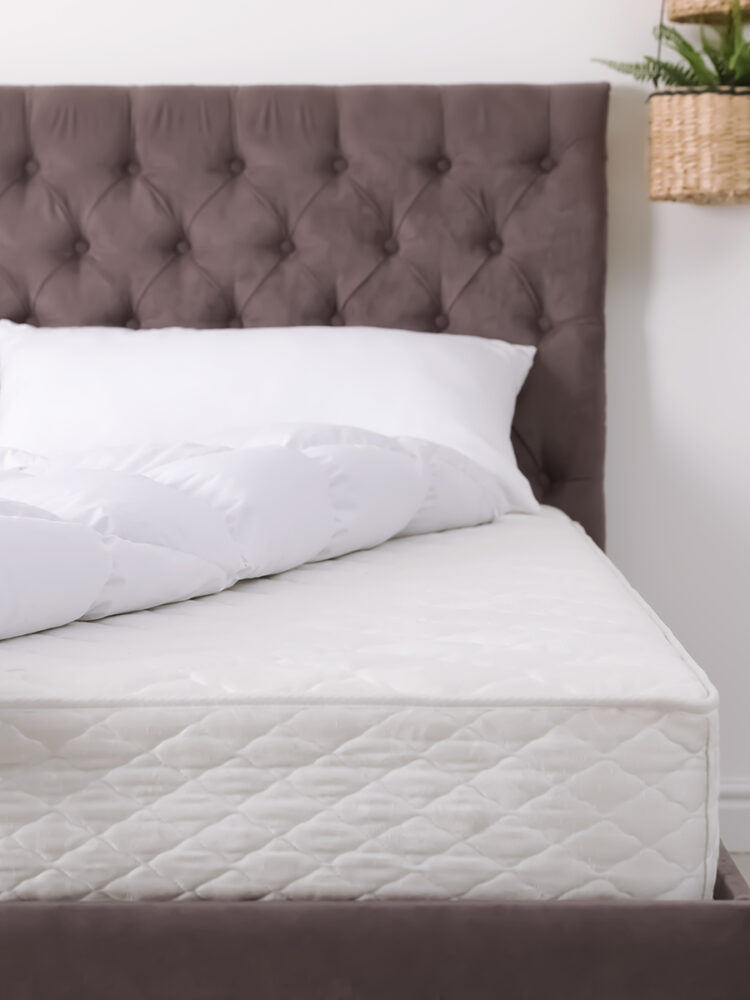
Healthy sleep requires a conscious routine and the right environment. Ensure a comfortable room temperature (around 18 degrees), sufficient darkness and regular sleeping times. An ergonomic mattress that provides optimum back support can also help to prevent tension and pressure points.
The right mattress for old age
Body weight and muscle tension change with age – the mattress should compensate for this. Models that provide point-elastic support while relieving pressure are recommended. The mattress should yield in the shoulder and pelvic area in particular, while keeping the lumbar area stable.
Conclusion
Sleep changes with age – but that doesn’t mean it has to get worse. If you know your own needs and actively take care of your body, you can wake up refreshed, balanced and full of energy even at 40+. A suitable mattress, healthy habits and a conscious evening ritual are the best prerequisites for this. On our price page, we show you which solutions suit different needs and budgets.
FAQ – Frequently asked questions about sleeping comfort
Why do I wake up more often at night?
The sleep phases become lighter with age. Noise, temperature or stress can lead to waking up more quickly.
Does a new mattress really help with sleep problems?
Yes, if it fits the individual. An ergonomic mattress supports the spine and can significantly reduce discomfort.
How much sleep do I need after 40?
Most adults still need 7 to 8 hours of sleep per night. Quality is more important than pure duration.
Should I take melatonin?
Melatonin supplements can help, but should only be taken after consulting a doctor. An adapted sleep routine is often sufficient.
Subscribe to the newsletter now
With our newsletter, you will receive regular tips for restful sleep, information on new products and exclusive promotions so that you wake up refreshed every morning.