Waterbed or alternative? How to find the sleeping system that really suits you
When the feeling of lying down, care or couple’s sleep become an issue, this orientation helps.
Appointment for a sleep consultation
For many people, a waterbed feels surprisingly relieving at first: warm, even, almost weightless. It is precisely this feeling of lying on a waterbed that is a real gain in comfort for many. At the same time, there are good reasons why others consider an alternative over time – for example, because of the wave motion, temperature, care requirements, noise or different sleeping habits as a couple.
It is important to note that it is not a question of whether a waterbed is fundamentally “good” or “bad”. The decisive factor is whether the sleeping system suits your sleeping position, your body and your everyday life. This article is intended to help you do just that.
If you would like to better understand sleep problems as a whole, the article on Understanding sleep disorders will also help.
What a waterbed can do well – and where its limits may lie
A fair comparison begins with a sober classification.
Typical strengths
-
Even pressure distribution, often pleasant for sensitive pressure points
-
Warmth that many find relaxing
-
Soft lying sensation with the impression of being “carried”
Typical boundaries in everyday life
-
Support effect varies depending on soothing, filling quantity and body shape
-
Resonance and motion transmission can interfere as a pair
-
Sleeping climate and temperature are not equally comfortable for everyone
-
Care and technology often become more relevant over time
That is why the central question is rarely: “What is the best alternative?”
But rather: “Which alternative meets my needs?”
Which alternative suits which need?
The focus is not on the material, but on what you actually need while you sleep.
If you like the “floating feeling”
Pressure-relieving concepts are then of interest, for example foam or hybrid structures. The balance is important: relief yes, but with enough support so that the body is not unstable at night.
That’s what matters: Shoulders and pelvis are allowed to sink in, the lumbar region remains supported, turning should remain easy and the climate must suit how you feel.
If you want more stability
If you do a lot of correcting at night or have the feeling in the morning that you have not been properly supported, systems with clear support and a suitable slat base are often useful. The lying sensation is less “floating”, but often quieter.
This is what matters: stable positioning on the side and back, no over-hardening of the shoulders or hips, and a harmonious combination of mattress and slat base.
If you have different needs as a couple
Two people rarely sleep the same. A shared system with only one adjustment quickly leads to a compromise. It makes more sense to find solutions that take both sides individually into account without the feeling of the bed falling apart.
That’s what matters:
- Low motion transmission
- Individually adjusted lying zones or firmness per side
- Same lying height despite different needs
- Calm behavior when turning and boarding
When care or temperature stress you
Some people like the waterbed in principle, but want a simpler, lower-maintenance solution for everyday life. In this case, the focus is not primarily on the lying sensation, but on the desire for less technology, less maintenance or a different sleeping environment.
In such cases, it is worth focusing on systems without water and heating – with a view to material logic, ventilation and suitability for everyday use.
That’s what matters:
- Climate characteristics of the system
- Subjective feeling of warmth
- Low maintenance and handling
- Harmonious interaction with comforter, bed linen and room temperature
When the back, shoulder or neck are in the foreground
If discomfort is the main reason for the change, a simple distinction will help:
- Pressure problem: shoulder or hip are not sufficiently relieved
- Support problem: The spine is not guided in a stable manner
- Combination: Very common in practice
Many wrong decisions are made because people only opt for “soft” or only for “firm”. In most cases, both are needed: targeted relief and stable support – to suit the sleeping position and body shape.
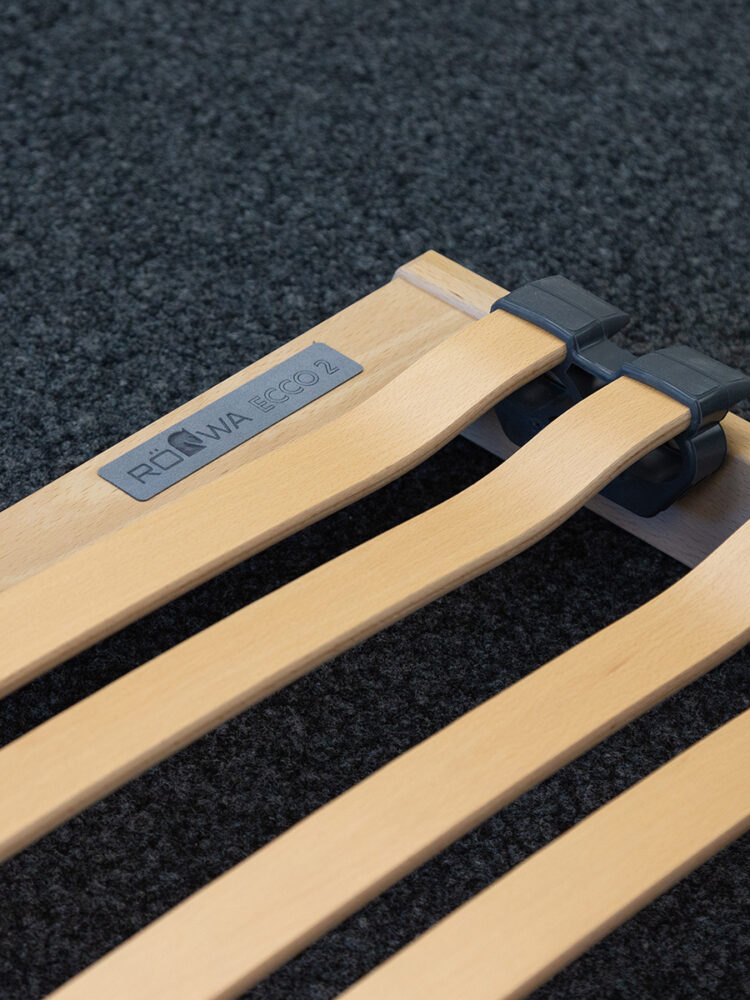
This is often underestimated: spring base and structure
With a waterbed, the base is part of the system. When switching to a different sleep system, more than just the “mattress” usually changes.
Many alternatives only really work properly if the mattress and slat base are perfectly matched. For the shoulders, pelvis and lumbar region in particular, this coordination is often more important than the material alone.
A system can look good on paper – and still not be convincing in practice if the basis is not right.
No need to guess: How to check whether an alternative really fits
If you are switching from a waterbed, you don’t want to make the wrong decision again. Therefore, don’t make a decision based on the name of the material or your first impression, but check the lying sensation specifically:
- Let more than first impressions count
Pleasant or unfamiliar when you lie down says little about how soundly you will sleep later. - In your typical sleeping position, test
side or back position, shoulder and pelvis, lumbar region as well as turning and repositioning. - In your typical sleeping position, test
side or back position, shoulder and pelvis, lumbar region as well as turning and repositioning. - Pay attention to body reactions, not to terms
The decisive factor is whether pressure relief and support match and your body is lying still. - Thinking as a couple right from the start
Movement transfer and different needs should be part of the test - Objective classification in case of uncertainty
If complaints or several factors come together, test lying plus lying analysis can provide additional orientation.
Conclusion
A waterbed alternative should not simply “sound similar”, but should better meet your everyday needs. For some, the waterbed remains the right solution. For others, an alternative makes more sense because pressure relief, support, rest, sleeping climate and suitability for everyday use are a better match.
FAQ – Frequently asked questions
How do I find the perfect bed for me and my partner?
The ideal bed for couples depends on various factors: Space requirements, sleeping habits and comfort. Choose a bed that offers enough space for both of you, at least 160 cm wide, preferably 180 cm or more. Also think about your sleeping positions and individual needs, such as the firmness of the mattress.
What should we do if we have different sleeping habits?
If you have different needs, such as sleeping positions or the firmness of the mattress, a split mattress is a good solution. This way, each partner has their own area and can choose the desired firmness level without disturbing the other.
Why is the choice of bed so important for sleeping as a couple?
The right bed not only affects your sleeping comfort, but also your health. The wrong mattress can lead to back pain or sleep disorders. A well-chosen bed ensures better sleep, less movement transfer and a more restful night.
How does the slatted frame affect sleeping comfort for couples?
An adjustable slatted frame allows you to adjust the head and foot sections individually. This is particularly helpful if one of you likes to read in bed or needs a raised head area. It also ensures even support and promotes the longevity of the mattress.
Subscribe to the newsletter now
With our newsletter, you will receive regular tips for restful sleep, information on new products and exclusive promotions so that you wake up refreshed every morning.