When it makes sense to only change individual components
Not everything new. But the right thing to fit.

Appointment for a sleep consultation
The bed no longer feels quite right – but not completely wrong either.
Perhaps the neck or shoulder is reacting. Maybe it’s the climate. And the question immediately arises: replace everything – or make specific adjustments?
When is a single change enough – and when should the entire system be checked?
The aim of this article is to provide clarity so that you neither invest unnecessarily nor live with a half solution for too long.
Briefly explained
A sleep system is a combination of mattress, slat base, pillow and bed climate. If something no longer fits, often only one component is the main trigger. The decisive factor is not how much you replace – but whether you make the biggest leverage. It’s not the amount of change that matters. It’s how well they fit.
The most common misconception
Many make decisions based on emotion:
- “It’s probably just the pillow.”
- “Everything has to be new now.”
Both can be true. But both can also miss the point. Without a structured view, it remains a guessing game. This is precisely why it makes sense to first realistically assess your own sleep. The
👉 5 questions that help you to realistically assess your own sleep are helpful here.
When a targeted adjustment makes sense
A single change is often sufficient if the problem can be clearly localized.
Cushion as a lever
If the neck and shoulders in particular react, the influence is often in the head and neck angle and not necessarily in the mattress. Small changes can already provide noticeable relief here.
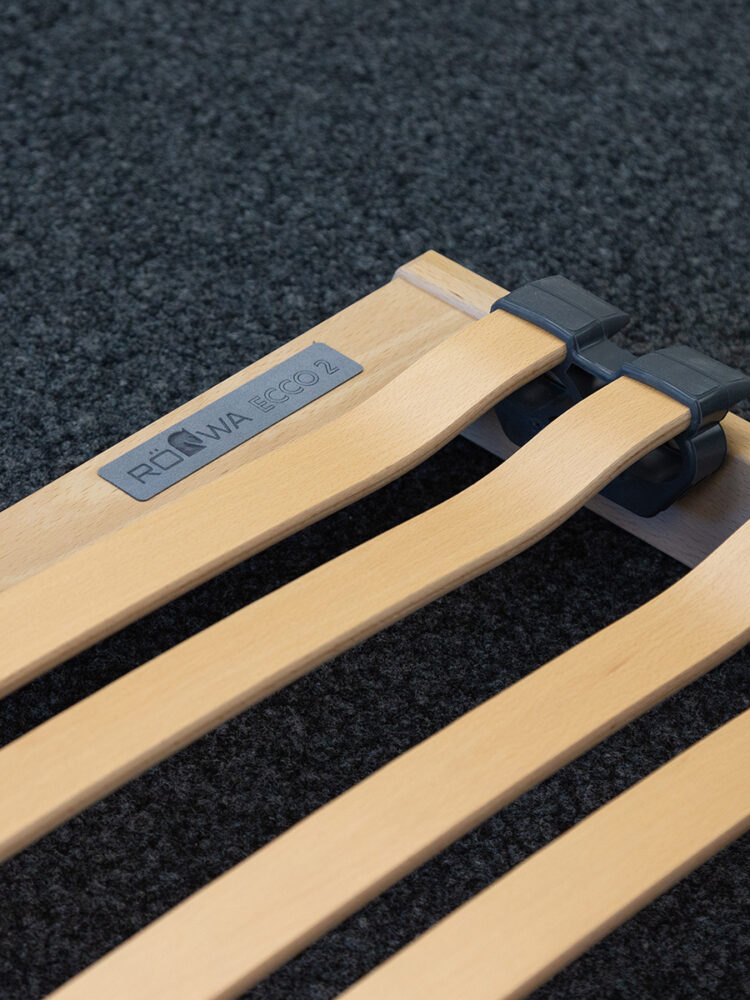
Spring base as adjusting screw
Incorrect settings can alter support and ease of movement, even though the mattress is fundamentally suitable. A targeted fine adjustment can be sufficient to restore balance.
Mattress as a clear factor
If pressure points arise or certain zones no longer work properly, a targeted adjustment can be useful – especially for localized complaints.
Bed climate
Freezing or sweating at night does not necessarily mean a new bed. Materials, toppers and comforters can make a big difference. You can read more about this in the article
👉 Why you freeze or sweat at night.
Not every sleep problem requires a complete change. Sometimes a precise adjustment is the most effective step.
When the entire system should be considered
An overall view is useful if:
- several complaints occur simultaneously
- no position is really stable
- You sleep much better elsewhere
- your physical situation has changed significantly
- the problem cannot be clearly assigned
Here, the cause often lies in the interaction – not in the individual part.
The article
👉 What is most important when it comes to beds also provides in-depth guidance.
A systemic view often reveals where the actual instability arises.
Systems thinking instead of individual parts logic
A sleep system works like a balance. If one part changes, it affects the other. Therefore, the central question is not: Which part is bad? But rather: Where does the instability arise in the system?
If you only exchange one detail without understanding the interplay, you risk shifting symptoms instead of clarifying causes.
Objectifying instead of guessing
A structured sleep consultation with sleep analysis helps to recognize:
- How is the spine guided?
- Where does pressure arise?
- Which component is actually the biggest lever?
The spine scan serves as a decision-making aid, not a diagnosis and not a substitute for medical clarification.
Service and investment logic
A targeted adjustment makes sense if it solves the core problem. A complete change makes sense if the system as a whole no longer works. Advice reduces the risk of investing too much or changing too little.
Conclusion
Not every change in lying sensation means that the entire bed needs to be replaced. A targeted adjustment is often sufficient if it is clear where the instability arises. At the same time, sometimes it is only when you take a systemic look that it becomes clear that several components are interacting.
If you consciously review your sleep system, you create stable conditions for restful nights – adapted to your body, stage of life and needs. This turns uncertainty into clarity and individual changes into a coherent overall solution.
FAQ – Frequently asked questions
Is it enough just to change the pillow?
If the neck or shoulder in particular react, the pillow can be the central lever. However, the decisive factor is whether the rest of the positioning remains stable.
When is a new mattress really necessary?
If pressure points occur permanently, the mattress has aged significantly or a stable position is no longer possible, a replacement may be advisable.
Can a different slat base alone make a big difference?
Yes, especially if the mattress is basically suitable, but the support or movement rest is not optimal.
How do I recognize that my entire system no longer fits?
If several complaints occur at the same time or if you sleep significantly better elsewhere, the entire system should be checked.
How does a lying analysis help with this decision?
It makes storage and pressure distribution comprehensible and helps to identify the greatest leverage in the system – before investments are made.
Does a partial adjustment make sense in the long term?
If it solves the core problem, yes. However, if only one symptom is changed, the issue may reappear later.
Subscribe to the newsletter now
With our newsletter, you will receive regular tips for restful sleep, information on new products and exclusive promotions so that you wake up refreshed every morning.